Buying safely
What is patina on a watch?
Patina is the slow, even change that age leaves on a watch, and done right it’s lovely. Spots, stains and flaking are something else: damage. The trouble is, from a phone photo the two can look surprisingly alike.
Spend ten minutes shopping for a vintage watch and you’ll see the word everywhere. “Lovely patina.” “Honest patina.” Sometimes it’s a genuine selling point. Sometimes it’s a polite word for a mark, and that’s the one that costs you money. So we went through the photos of 1,883 vintage listings to show you the difference on real watches, on sale right now.
The four looks at a glance
Here are four watches for sale as we write this. Two have aged beautifully, one is damaged, and one is brand new and painted to look old. Up close, you might be surprised how alike they look.
| Look | What you see | What it is |
|---|---|---|
| Real patina | The glow paint on the hands and markers has gone an even cream. | Age. Usually welcome. |
| Tropical dial | The dial itself has faded evenly, usually black to brown. | Age, on the dial. Often sought after. |
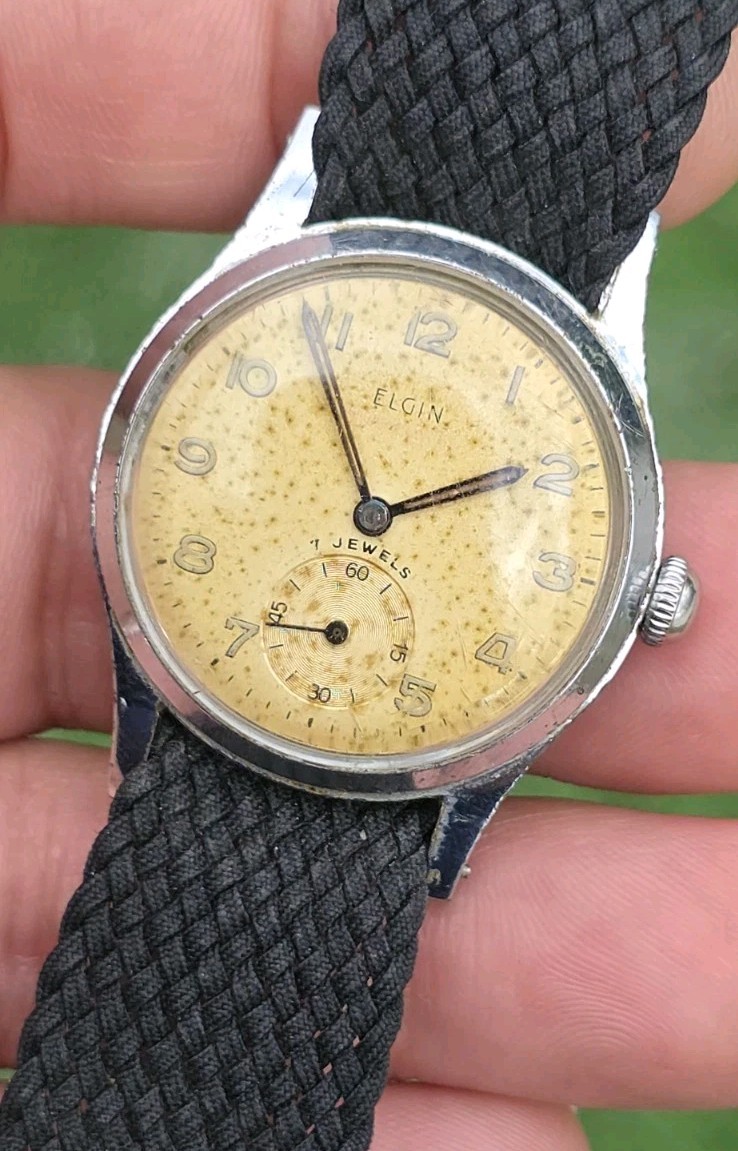
| Dial damage | Dark spots, a stain, a pale ring, or paint lifting off. | Harm, usually moisture. Takes value off. |
| Fake patina | Cream glow paint on a watch that is not old. | New paint made to look aged. |
What patina is
Older watches have paint on the hands and hour markers that glows in the dark. Watchmakers call it lume. On anything made before the late 1990s, that paint ages: white turns cream, and sometimes a deeper toffee. When every marker has gone the same shade, and the dial around them is clean, that even change is patina. For our money, it’s one of the loveliest things a watch can do.
The word that matters is even. Every part of the watch lived the same life, so it all aged together. That evenness is very hard to fake, which is why collectors love it: it suggests the dial is the one the watch left the factory with. A repainted dial (the trade calls it a “redial”) tends to look a little too fresh for its age, and it can take half or more off what a watch is worth. Our guide to spotting a fake goes into redials properly.

The brown dial: tropical
Now, sometimes it’s the dial that changes rather than the markers. A black dial fades evenly to brown, the way an old photograph does, usually after years in the sun. Collectors call this a tropical dial, and the good ones are genuinely sought after.
There’s a catch, though. Some watches were simply made with a brown dial, and sellers will call those tropical too. Our advice: look up what colour that model came in new. If it only ever came in black, the brown is age. If brown was on the menu, it’s just brown.

What patina is not
Which brings us to the part that matters most when you’re spending real money: the four things that get called patina and aren’t.
Spotting. Small dark dots scattered across the dial, usually because moisture got inside at some point. Light spotting is common, and plenty of people happily live with it. That said, it’s wear, not character, and it shouldn’t be priced like character.
Stains. A patch or a pale ring in one area, often near the edge. That’s where water sat. If you see one, ask whether the movement inside was checked for rust. A good seller won’t mind the question.
Flaking and cracks. The dial’s paint is lifting off. Frankly, this is the one to walk away from unless the price allows for it: it keeps getting worse, and it’s the most expensive dial problem to put right.
Worn print. The brand name or numbers have faded or rubbed away, usually from a past clean that went wrong. Easy to live with on a modest watch; a real dent in value on a good one.
Fake patina
Some brand-new watches are made with cream lume on purpose, to give them a vintage feel. Collectors call it “fauxtina”, which is a decent joke as these things go. There’s nothing wrong with it on a new watch, as long as nobody sells it to you as age. The tell is simply the rest of the watch: real patina sits on something that is genuinely decades old.

Bronze watches: patina on purpose
Most people who search for watch patina aren’t asking about vintage dials at all. They’re asking about bronze watches. Brands like Tudor, Oris and Hamilton have been making bronze-cased watches since the mid-2010s, and the whole point is that they change.
Bronze is mostly copper, and copper reacts with air, skin and water. A new bronze case starts out warm and bright. Over months of wear it darkens to a dull brown, unevenly, sometimes with little green spots where sweat sits. No two end up the same, and that’s exactly the appeal. It’s patina in the truest sense, just on the case rather than the dial, and in months rather than decades.
If you prefer it bright, it can be cleaned back, and it’ll start darkening again straight away. Leather straps work the same way, by the way: they darken and soften as you wear them, and a well-worn strap is part of the look, not a fault.

One honest gap: we only hold seven bronze watches in our archive, so we can’t tell you yet what patina does to their price. We’ll come back to it once we can.
True patina is rarer than the word
We describe what’s visible on each watch’s dial from the seller’s own photos. Across 1,883 vintage watches where the dial was clearly shown, this is what turned up. (A dial can show more than one thing.)
| What the dial shows | Share | Watches |
|---|---|---|
| Clean, nothing visible | 77% | 1,442 |
| Spotting | 16% | 302 |
| Dust under the crystal | 9% | 172 |
| Stains | 4% | 79 |
| Even colour change | 2% | 43 |
| Flaking or cracks | 1% | 23 |
DialHunter archive: listings from specialist dealers and eBay, dials described from photos, October 2026.
Interestingly, spotting turned up seven times as often as an even colour change. So when an advert says patina, the odds are it means spots. Read the photo, not the adjective.
What it does to the price
Dial condition does show up in the price. To compare like with like, here are three vintage Omega lines split by what their dials show. Median listing price, with the number of watches in brackets. Marked means spotting, dust or scratches; damaged means stains, flaking or cracks.
| Model | Clean | Marked | Damaged |
|---|---|---|---|
| Omega De Ville | $790 (89) | $512 (22) | $434 (3) |
| Omega Constellation | $1,278 (60) | $1,184 (22) | $749 (4) |
| Omega Genève | $506 (29) | $500 (29) | $500 (16) |
Listing prices. DialHunter archive, October 2026.
The gap is bigger than you might expect. A marked De Ville is listed at about a third less than a clean one. A Constellation with a stained or flaking dial is listed at about 40% less. The Genève barely moves, and that makes sense: it’s Omega’s entry line, and people buying one are paying for the watch more than the dial.
To be fair to the numbers, two caveats. These are listing prices, not what the watches sold for. And some groups are small (only four damaged Constellations), so treat them as a direction of travel rather than a price list. For the bigger picture, here’s what vintage Omega actually costs.
How to check a dial before you buy
None of this needs specialist kit. Five things to do before you pay:
1. Ask for a daylight photo, straight on, with no glare.
Most dial problems hide behind reflections or a scratched crystal. If a seller won’t send one, that tells you something.
2. Is the change even?
Patina covers every marker the same. Dots, patches or one dark edge are something else.
3. Is the wear over the print, or the print over the wear?
On an original dial, age touches the printed name and numbers too. Crisp, fresh print sitting on an old, worn surface can mean the dial was repainted. It sounds fiddly, but once you’ve seen it you’ll spot it everywhere.
4. Do the hands match the markers?
They usually age together, so bright white hands over cream markers often means the hands were replaced. Not a deal-breaker on its own, but worth a question.
5. Ask one simple question:
“Has the dial, or anything on it, been restored or replaced?” A good seller answers plainly, and a vague answer tells you plenty.
The short version
Patina.An even brown dial
Tropical.Spots, stains or flaking
Damage.Cream lume on a new watch
Paint.More in our full guide to buying a vintage watch.
Not sure about one you've found?
Send us the listing. We'll tell you what the dial is showing, what that watch has actually sold for in our archive, and what to ask the seller before you pay.
Get a watch checked →Keep reading

